Getting services for your baby after the NICU
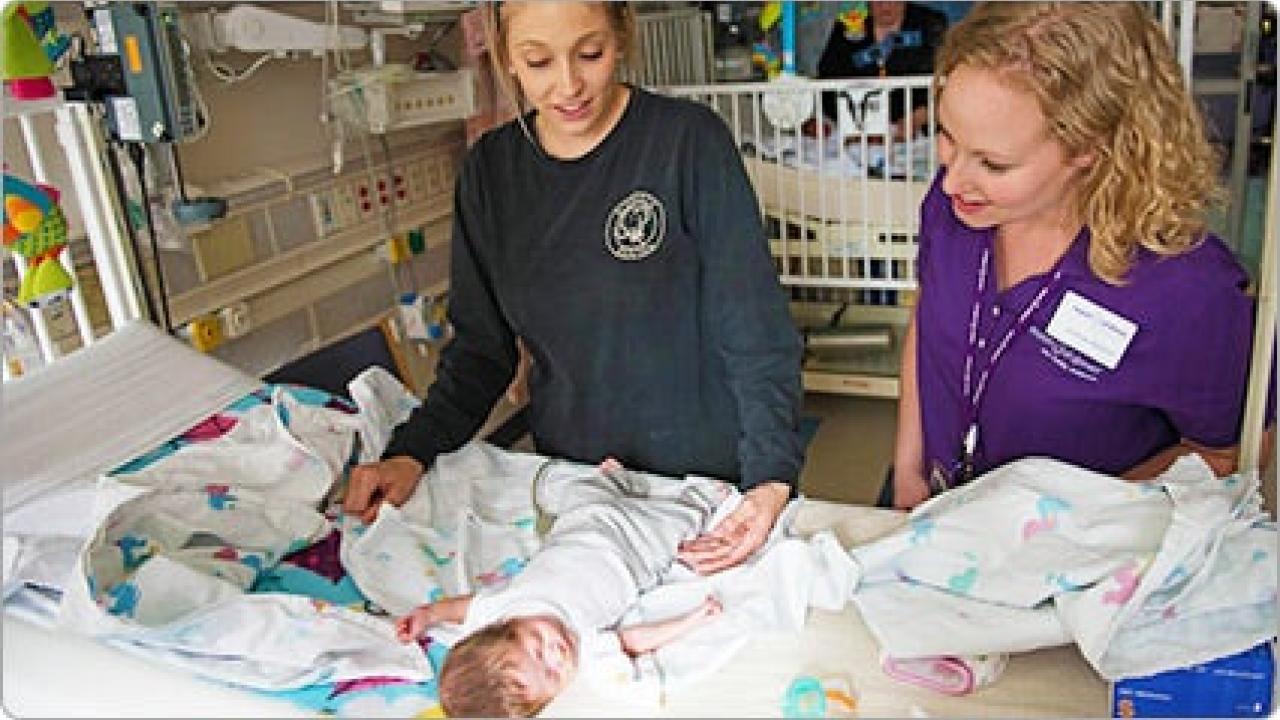
Babies who have spent a lot of time in a NICU can be at risk for delays in:
- Speech and language
- Cognitive skills (thinking, learning and reasoning skills)
- Motor skills (moving with a purpose)
The earlier these delays are identified and treated, the more likely the child will be able to reach his potential later in life. In the United States, parents can contact state and local programs for help.
What are early intervention programs?
Children at risk of developmental delays are often referred to an early intervention program. States are required to:
- Find and evaluate infants and toddlers who are at risk for, or who have, developmental delays or disabilities
- Provide support services to these children
In most states, all NICU graduates are eligible for evaluation.
Your child will receive a diagnostic evaluation. The goal is to determine your child's strengths and any areas that can be improved. Depending on your child's needs, the evaluation may include health care providers in one or more of these fields:
- Medicine
- Nutrition
- Psychology
- Social work
- Education
- Hearing
- Vision
- Speech and language
- Physical therapy
- Occupational therapy
If the evaluation finds a delay or potential for delay, your baby may qualify for services. The level of delay required to qualify for services varies from state to state.
What happens if your child is eligible for services?
An Individual Family Service Plan (IFSP) is created to meet the needs of your child and family. Your child may receive services at home or elsewhere, depending on what he needs.
In an early intervention program, the family and the service providers work together. The goal is to give the child the best possible start in life.
Although it may be hard, try to be positive about a referral to these services. A referral is not a reflection on you or your parenting skills. By using the services, you are being a good parent. You are giving your baby the best chance to get a good start in school and in life.
Once your child turns 3 years old, your local school district is responsible for providing services to him. If you think your child might need special help, call your local school district and ask for an evaluation.
See also: Share your story
Last reviewed: November, 2023